// Medical Device Display Reference

MEDICAL DEVICE DISPLAY REFERENCE
SPECIFYING AND REPLACING THE PANEL.

A display inside a medical device is defined by six things: active area, resolution, brightness, backlight, interface and surface treatment. This page covers what each one governs and what changes when the original LCD goes end-of-life. Tannas Display Solutions is a custom LCD display supplier for medical device manufacturers, building panels to specification, custom-sized or standard-sized, for patient monitors, surgical and endoscopy displays, imaging carts, ventilators, infusion equipment and diagnostic instruments. Panels still in production are sourced.
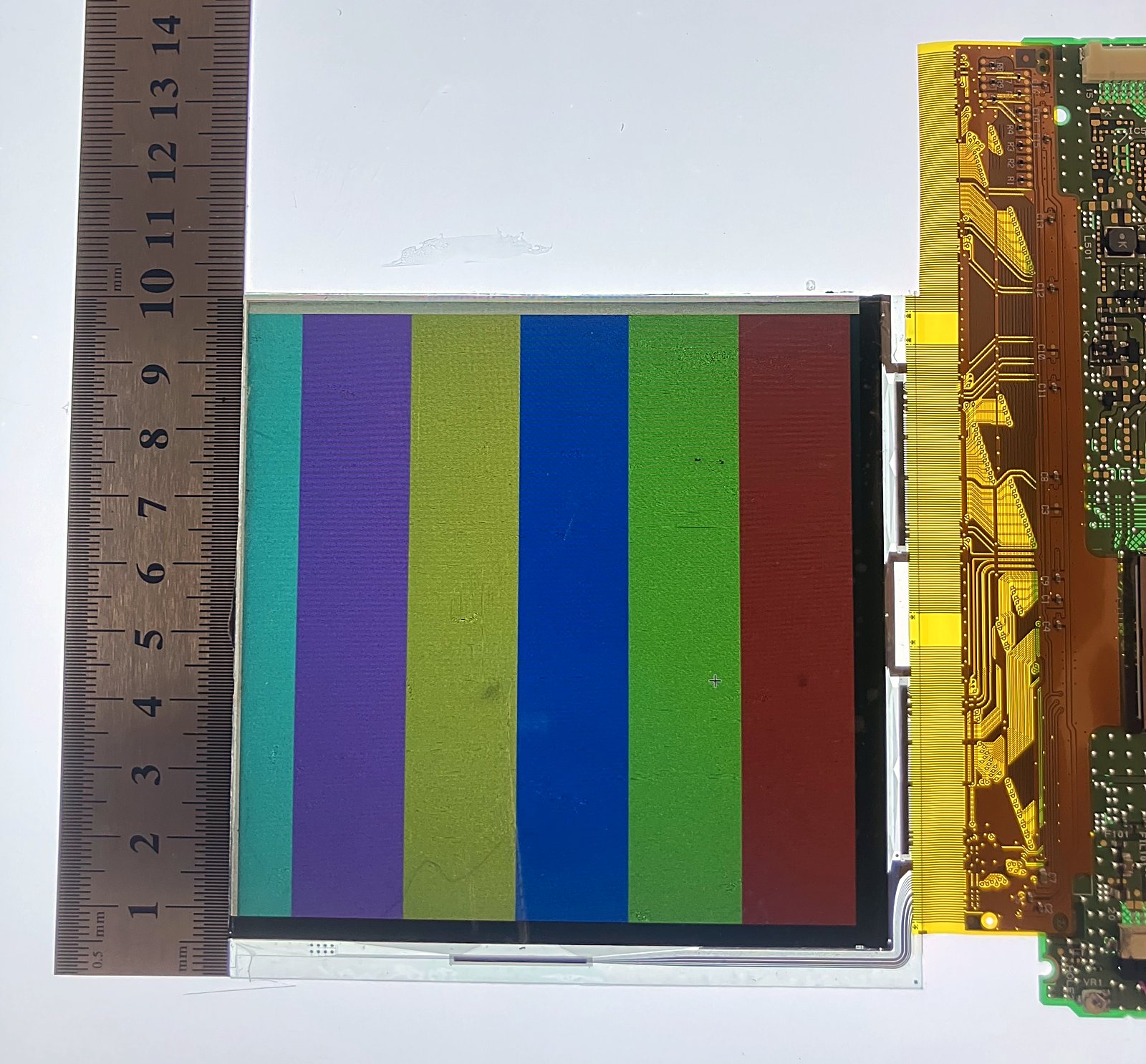
Custom resized LCD panel under dimensional verification — Tannas Display Solutions

Dimensional verification — active area measured against the specified dimension

✓ No fixed size limit — built to your active area ✓ Brightness to ~1,000 cd/m² ✓ No MOQ — 1 unit to full production ✓ Engineering review within 1 business day

// Specification Basics

What Governs a Display Inside a Medical Device?

Six attributes determine whether a display works in a device, and they are not equally negotiable. The same six govern a patient monitor, a surgical display, an ultrasound cart, a ventilator and an infusion pump. Only the values change.

Active Area

Fixed first, changed last. The enclosure has an opening, a bezel, and a mounting arrangement, and once a device is in production those are expensive to alter. The display fits the housing, not the other way round.

Resolution

Follows the clinical task. Waveform display, numeric vitals, and menu navigation have modest requirements. Image review, endoscopy, and ultrasound do not.

Brightness

Follows the viewing environment, not the device category. The same monitor specified for a darkened procedure room and for an ambulance interior needs two different backlight configurations.

Backlight

Determines service life, power draw, thermal behaviour, and whether the display dims cleanly to the levels a darkened clinical space requires.

Interface

Dictated by the driver electronics already in the device. On equipment designed a decade or more ago, this is often the attribute that eliminates otherwise suitable panels.

Surface Treatment

Glare control, optical bonding, and resistance to repeated chemical disinfection: the requirement most often discovered after the first cleaning cycle rather than during design.

// Capability

Specification Envelope

Tannas Display Solutions produces custom-sized LCD displays to specification across the full attribute set below. A requirement that matches a catalog panel and a requirement that no catalog panel can meet are handled the same way: the display is built to the specification the device needs.

AttributeAvailable range
Active areaNo fixed size limit. LCD cell resizing produces the exact active area the device requires, including non-standard and square formats.
ResolutionSpecified to requirement.
BrightnessStandard through high-brightness configurations, up to approximately 1,000 cd/m².
BacklightLED, CCFL retention where the original design requires it, and NVIS-compatible configurations.
InterfaceLVDS, TTL, eDP, and MIPI.
Optical bondingAvailable.
Surface treatmentAnti-glare and anti-reflective coatings.
TouchResistive and projected capacitive.
Operating temperatureTo −40 °C through +85 °C, dependent on the cell selected for the build.
IntegrationController, cabling, enclosure, and full module integration. Performed in the United States where the program requires it, or offshore where cost governs.
QuantityNo minimum order quantity.
Lead time6–8 weeks standard, after receipt of order.

Every order includes quality control, first-article support, and lot traceability. A dimensional inspection report documenting active area, pixel pitch, and optical stack is supplied with each build.

// Brightness

How Much Brightness Does a Medical Device Display Need?

Most medical device displays need 250 to 500 cd/m². Equipment used under procedure lighting, in transport, or in daylight-adjacent areas needs high-brightness configurations, up to roughly 1,000 cd/m². Brightness is set by where the device is used, not by what it is.

Bedside monitors, infusion equipment, and cart-mounted systems generally operate in the 250 to 500 cd/m² range. Equipment used under procedure lighting, in transport and ambulance interiors, or in daylight-adjacent areas needs high-brightness configurations, which is where the upper part of the range applies.

The requirement that gets missed is the lower bound. Devices used in darkened rooms need to dim without the backlight becoming unstable or the greyscale collapsing at low output. Dimming range is a specification in its own right and is worth stating explicitly rather than assuming.

// Service Life

Why Medical Displays Are Replaced While the Device Still Works

Displays in clinical service rarely fail outright. They dim.

Backlight output declines over operating hours. Designers compensate by specifying maximum luminance above the target operating level, then drawing on that headroom as the backlight ages. When the headroom is exhausted, the display can no longer reach its specified brightness, while still lighting, still functioning and still passing every visual inspection.

On equipment that runs continuously, this arrives well before the end of the device's serviceable life. It is the most common reason a display is replaced in a device that is otherwise entirely sound, and it is why brightness headroom is worth specifying deliberately rather than accepting whatever a catalog panel happens to provide.

Why a display is replaced before the device fails A single curve shows a backlight starting brighter than the device requires and losing brightness with use. The shaded area between the curve and the dashed line is the headroom specified at design time. When the curve meets the dashed minimum, the display must be replaced even though the device still works. Scales are relative; no absolute brightness value or service interval is implied. DISPLAYS DON'T FAIL. THEY FADE. A backlight starts brighter than the device needs, and dims with use. Minimum brightness the device needs Brightness when new Headroom used up over the years Display replaced here The device still works. Only the display is finished. Time in service → Brightness → More headroom specified at design time means more years before this point.
Relative scales. No absolute brightness value or service interval is implied.

Cold-cathode backlights reach this point sooner than LED and are increasingly difficult to source, so older equipment frequently needs a new panel and a different backlight technology at the same time. Medical display solutions →

// Interfaces

Interfaces on Legacy Medical Equipment

Interface compatibility, not size, is what usually rules out a replacement panel. A device designed in the mid-2000s commonly drives its display over a parallel TTL interface, while current production panels are predominantly LVDS, eDP or MIPI. The driver electronics inside a fielded device were designed around the original panel and are not trivially changed. Altering them can reach further into the device than replacing the display itself.

This is why interface compatibility, rather than size or resolution, is often the constraint that rules out otherwise suitable panels. A display can be built to the original interface, or supplied with the controller and cabling required to bridge to a current one, depending on which path is less disruptive to the device.

// Surface & Cleaning

Surface Treatment, Bonding, Touch, and Cleaning

Clinical equipment is wiped down repeatedly with disinfectants: alcohol, bleach solutions, quaternary ammonium compounds. Over a device's service life this is a materials requirement, not an afterthought. Coatings, adhesives and gasket materials all sit in the path of that exposure.

Anti-glare and anti-reflective treatments address overhead lighting and procedure lamps. Optical bonding eliminates the air gap between panel and cover glass, which improves contrast under bright lighting, adds mechanical robustness, and removes the internal surfaces where condensation and particulates otherwise collect.

Touch integration is available as resistive or projected capacitive. Both are compatible with sealed-front constructions; the choice is generally driven by glove use and by cleaning protocol rather than by display performance.

// Obsolescence

When the Original Panel Is Discontinued

Display obsolescence is the most common reason a medical device needs a replacement LCD. A display used in a cleared device is designed in for the life of that device, and panel production lifecycles are considerably shorter. The mismatch is routine: a device still manufactured, still supported and still in fleet service, built around an end-of-life panel nobody makes any more.

There are two paths, and the first question is simply which one applies.

If the Panel Is Still Available

In production, in distribution stock, or available as a current-production equivalent, Tannas Display Solutions will source it at the most competitive price available. Send the original part number and you get a direct answer on availability.

If It Is Not

The replacement is built at the original active area, so the enclosure, mounting, and mechanical interface are unchanged. No mechanical redesign. The dimensional inspection report supplied with the order documents the equivalence for your change assessment.

The same applies to a requirement no catalog panel meets in the first place: an active area, brightness, backlight or interface combination that simply is not produced. There is no difference in how those are handled.

// Scope

What Tannas Display Solutions Supplies — and What It Does Not

Tannas Display Solutions supplies the display: an LCD panel built to specification, with the integration, controller and cabling work the device requires, and enclosure work where needed. Quality control, first-article support, lot traceability, and a dimensional inspection report are supplied with the build.

Tannas Display Solutions does not make regulatory determinations. Whether a display change requires a new premarket notification, how a device is classified, and what testing the finished device must pass are the device manufacturer's decisions, made under the manufacturer's own design controls and quality system. Documentation is provided as evidence for that process; it does not substitute for it.

Stating that boundary plainly is deliberate. A component supplier that blurs it creates work for your quality team rather than removing it.

Common Questions

Medical Display Specification — Frequently Asked Questions

What determines the display size in a medical device?

Enclosure geometry determines it. The display must fit the housing opening, deliver the resolution the clinical task requires, and interface with the device driver electronics. Because the enclosure is fixed once a device is cleared, the active area is normally the first specification set and the least negotiable.

What brightness does a medical device display need?

It depends on the viewing environment rather than the device class. Bedside and cart-mounted equipment typically operates in the 250 to 500 cd/m2 range. Displays viewed under procedure lighting, in ambulance or transport use, or in daylight-adjacent areas call for high-brightness configurations. Tannas Display Solutions builds to specification up to approximately 1,000 cd/m2.

Can a discontinued medical device display be replaced without redesigning the device?

Yes, when the replacement holds the original active area and mechanical interface. Tannas Display Solutions produces the replacement at the original dimensions so the enclosure, mounting, and mechanical interface are unchanged. Every order includes a dimensional inspection report documenting active area, pixel pitch, and optical stack, which your quality and regulatory teams can use as evidence in their own change assessment. Tannas Display Solutions does not make regulatory determinations; whether a change requires a new premarket notification is the device manufacturer's decision.

Why do medical device displays get replaced while the device is still serviceable?

Backlights lose output over their service life. A display specified with limited brightness headroom eventually cannot reach its target luminance even though the device functions normally. On equipment that runs continuously, the display reaches end of useful life well before the device does.

Does Tannas Display Solutions supply standard catalog panels as well as custom sizes?

Yes. If the panel a device needs is still in production, Tannas Display Solutions will source it at the most competitive price available. If it is discontinued, or if the requirement calls for an active area, brightness, backlight, or interface that no catalog panel provides, the display is built to that specification.

View all questions →

// Get Started

Program-Specific Questions? Ask Engineering Directly.

Provide your original part number, active area dimensions, and application. Engineering will review feasibility and identify a replacement path within one business day. No commitment required.

Requirement Received

Submit Requirement — Response Within 1 Business Day

Submit a Requirement
// Free feasibility — 1 business day response
Required
Required
Valid email required
Horizontal mm
Required
Vertical mm
Required

No commitment required — feasibility review at no cost